Delivery from €16.90 per winemaker in Europe (excluding the United Kingdom)

Unbeatable !
WINE UNDER THE OCEAN: AN INCREASINGLY POPULAR PRESERVATION TECHNIQUE
The Underwater Wine Storage Trend: Preserving Wine in Optimal Conditions
Optimal Wine Storage Conditions
All wine experts agree: to preserve your wine under optimal conditions, it must be stored in a dark and humid place. Ideally, your bottles should be placed in a completely dark room with a temperature between 10 and 13 degrees Celsius. The principle of storing wine under the ocean follows these exact criteria.
This trend emerged after the surprising discovery in 2010 of more than 160 bottles of champagne in a shipwreck at the bottom of the Baltic Sea. The champagnes, which were believed to have been produced between 1782 and 1788 by the house of Veuve Clicquot, were found in very good condition. At the time, Philippe Jeandet, a biochemistry professor at the University of Reims in charge of analyzing the recovered bottles, explained to Le Monde:
"What surprised us was that after 170 years at the bottom of the Baltic Sea at a depth of 50 meters and a constant temperature of 4 degrees, these wines retained the intrinsic characteristics of Champagne wines in terms of alcohol, sugars, aromas, organic acids, and glycerol."
Underwater Wine: Unique Aromas
But what is the point of immersing your wine underwater when you can keep it in a cellar? According to Denis Drouin, co-founder of Amphoris, the first "underwater wine cellar," a wine stored under the sea would not have quite the same aromas as a wine stored in a traditional cellar:
"Subjected to greater hydraulic pressure, the gas exchanges in the liquids would evolve the wines more quickly, giving them a unique taste."
Whether for the spectacular aspect or the flavor profile (or perhaps both), the concept is increasingly appealing to professionals. This is notably the case for Patrick Réty, a winemaker in Languedoc at Domaine Réty, who plans to soon immerse a hundred red wines in the seas off Saint-Malo (Brittany).
"We are starting to have some experience with white wine, which has a fatter and more mineral taste when aged under the sea. However, very few such experiments have been conducted with red wine. Perhaps the effect of the sea will bring a marked salinity to my wines as well as a great aging potential," hopes the winemaker.
Our nuggets
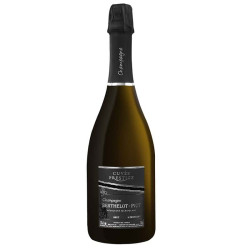
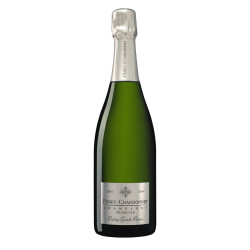
Penet-Chardonnet Grand Cru - Prestige Grande Réserve Multimillésime
LA MAISON PENET
Champagne
€135.00