Delivery from €16.90 per winemaker in Europe (excluding the United Kingdom)

Unbeatable !
WHAT IS THE DIFFERENCE BETWEEN AN OENOLOGIST AND A SOMMELIER ?
Understanding the Differences Between an Oenologist and a Sommelier
The Role of the Oenologist in the Wine Production Chain
The roles of an oenologist and a sommelier are often confused, yet their responsibilities are quite distinct.
An oenologist works upstream of bottling, advising winemakers and overseeing the vinification process. In contrast, a sommelier is part of the restaurant industry, responsible for building a restaurant’s wine cellar and pairing wines with dishes to enhance the customers' dining experience.
To understand the specific role of an oenologist, one can look at the etymology of the term. “Oenology” is derived from two Greek words:
- Oeno: from the Greek οἶνος (oînos), meaning wine.
- Logie: from the Greek λόγος (lógos), meaning science.
Thus, oenology is literally the science of wine. An oenologist plays a “scientific” role in wine production, advising the producer from vineyard to bottle on decisions based on the terroir (climate, soil, grape variety) and the desired outcome.
In essence, the oenologist defines the recipe for a wine.
This profession began in 1955 at the Faculty of Pharmacy in Montpellier, largely as a response to the phylloxera crisis of 1880. Increasingly, wine analyses and research are conducted to ensure quality.
How to Become an Oenologist
The role of an oenologist is highly scientific, which is reflected in the studies leading to this career. The National Oenology Diploma (DNO) is a Master’s level qualification that takes two years to complete (Bac + 4 and +5).
This diploma covers all topics related to the vineyard and winemaking (The vine and its environment, basics of viticulture and grape production, the science of microorganisms and fermentation, oenological practices and treatments, quality assurance, hygiene and safety, wine composition and evolution, etc.)
It is logically accessible to holders of a Bac+3 degree in scientific fields such as biological, chemical, biochemical, or agronomic sciences.
The Role of the Sommelier
The role of a sommelier is quite different, as is its etymology. The term "sommelier" comes from the Provençal word “saumalier,” which in the Middle Ages referred to a person who took care of pack animals. Over time, this term came to be used more broadly to describe someone who managed linens, dishes, provisions, and the wine cellar.
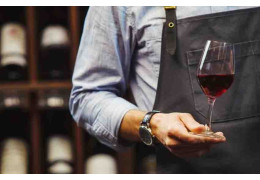
As you can see, this is a distinct role! The sommelier's work begins after the wine has been bottled. They work in establishments that serve wine (hotels, wine bars, restaurants, etc.), responsible for selecting wines and suppliers, creating the wine list, managing the wine cellar, and acting as an advisor and salesperson during service. They are particularly tasked with defining the best food and wine pairings.
How to Become a Sommelier
The profession of sommelier requires extensive knowledge of the wine world and involves management and advisory skills.
The path to becoming a sommelier is quite accessible. The sommelier diploma can be obtained through a supplementary mention (MC) in sommellerie after a CAP (vocational qualification). It is also possible to pursue a BP (professional certificate) in sommelier to reach Bac level, and to advance to a BTS (Higher Technician’s Certificate) in hotel and restaurant management with a focus on restaurant management for greater responsibilities.
Although the title is accessible, it is a highly prestigious profession: thus, the reputation of the chosen school and the prestige of the establishments where a sommelier gains experience are important factors in their career.