Delivery from €16.90 per winemaker in Europe (excluding the United Kingdom)

Unbeatable !
HOW TO CHOOSE A VEGAN WINE ?
Understanding Vegan Wines
The Rise of Vegan Wines
Navigating the new trend of vegan winescan be challenging. More and more bottles are appearing with this new marketing claim, sometimes accompanied by a vegan label. For consumers, these labels create as much confusion as they do clarity. Just when you learn that a seemingly plant-based product might not be vegan, you encounter various labels and philosophies. As soon as you think you have the answer, new questions arise.
So, what is the truth? What do the different vegan wine labels mean, and what do they really signify? Between a new marketing El Dorado and genuine commitment, we help you find the wine that resonates with your convictions.
What Does "Vegan" Mean?
First, what makes a wine non-vegan? It’s important to understand that the term vegan is often used broadly and indiscriminately. Veganism is often associated with a plant-based diet that excludes all animal products (meat, eggs, milk, honey, etc.). However, being vegan extends beyond the plate for many; it means refusing animal exploitation in any form. This includes avoiding animal-based clothing like leather, domestication of animals, and the use of any animal-derived products.
Wine and Veganism
In viticulture and winemaking, there are numerous reasons to use animal products. The most known aspect related to vegan wines is the fining process. Fining is a stage in wine maturation where a coagulant is used to filter out suspended particles after fermentation. This step clarifies the wine and enhances its flavors and aromas. Coagulants can be plant-based (clay, algae, pea flour, soy flour) but are often derived from egg whites, pork gelatin, or fish glue.
Moreover, in viticulture, some winemakers graze sheep in their vineyards, use manure to enrich the soil, or employ horses for plowing. Even packaging can be challenging to certify as vegan due to the use of materials from various origins (such as ink).
Different Vegan Wine Labels
Various existing labels cover different aspects related to wine production.
-
The V Label (Vegan): Originating in Europe and distributed by the French Vegetarian Association (AVF), this is the most common label in France. It certifies that no animal products or animals were used in viticulture and vinification. It also prohibits GMOs but does not cover packaging or ban pesticide use. Therefore, biodynamic wines cannot be V Label, while conventional wines using chemical phytosanitary products can be.
-
The Vegan Society Label: Originating from the UK and recognizable by the sunflower in its logo, this label is almost identical to the V Label, except that GMOs can be allowed if not created using animal genes or substances.
-
Qualita Vegetariana Label: More stringent, this Italian label bans all animals from the domain and process, including equipment and packaging down to the glue on labels, and prohibits the use of GMOs. However, phytosanitary products are allowed.
-
Expertise Vegan Europe (EVE): The newcomer aims to clarify the issue with a multi-level system. The EVE Vegan label certifies the absence of animals or animal products throughout the production chain, with the same rigor as the Italian label. Levels 01, 02, 03, and 04 distinguish the use of phytosanitary products. Level 01 corresponds to the Qualita Vegetariana equivalent, level 02 is awarded if 95% of the products used are organic-vegetarian, and level 04 if 100% are.
Interpreting Vegan Labels
Vegan certification should be interpreted with awareness. Each label has its rules and limitations, which need to be understood. Things are evolving positively, increasingly allowing consumers to make informed choices and enabling everyone to enjoy a bottle of wine while respecting individual values.
Our nuggets
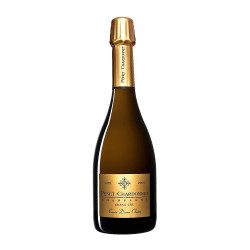
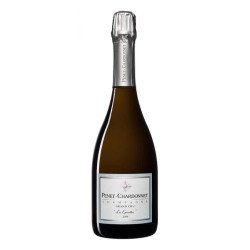
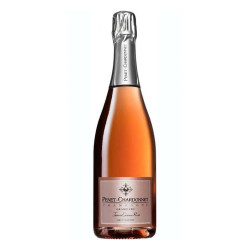
Penet-Chardonnet Grand Cru - Lieu-Dit "La Croix L'Aumonier" Extra Brut
LA MAISON PENET
Champagne
€166.00
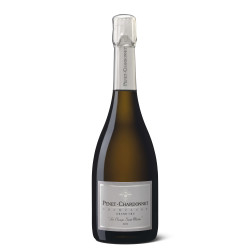
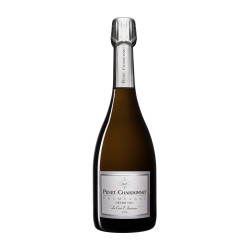
Penet-Chardonnet Grand Cru - Lieu-Dit "Les Champs Saint Martin" Extra Brut
LA MAISON PENET
Champagne
€166.00